

You may notice it gradually.
A shift that’s difficult to name.
Life may look similar from the outside. The days continue. The routines begin to form.
And yet, internally, something feels different.
Not always dramatically. Not always in ways that are easy to explain.
But enough to notice.
Sometimes it shows up in small moments.
A reaction that feels unfamiliar.
A thought you didn’t have before.
Many of us quietly wonder:
Why do I feel like a different person?
Within the experience of postpartum identity, this question is not a problem to solve. It is a reflection of something real taking place.
This is part of the broader postpartum experience, explored in Postpartum: A Season of Recovery, Identity, and Becoming.

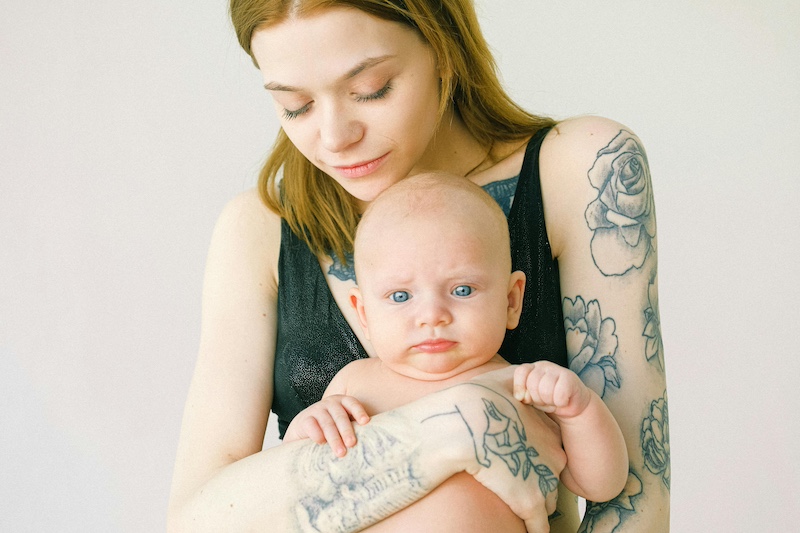
Identity After Motherhood Is Not Static
Becoming a mother is not only a change in role.
It is a change in identity.
Whether motherhood begins through pregnancy, surrogacy, adoption, or fostering, there is a reorganization that takes place internally.
Priorities shift.
Time feels different.
Attention is redistributed.
And often, the version of ourselves we once moved through the world as begins to feel less accessible.
This is not because it is gone.
It is because something new is forming alongside it.
The Experience of Feeling Different
The feeling of being different can show up in many ways.
A sense of distance from who we were. A shift in what feels important.
A lack of clarity about how we now see ourselves.
Sometimes it feels subtle.
Other times, more pronounced.
We may find ourselves asking:
Do I still recognize myself?
Where did that version of me go?
These questions are not signs of loss alone.
They are part of a developmental process.
This process is explored more deeply in identity in motherhood, where we begin to understand how identity evolves through lived experience.
Listening: Noticing the Shift Without Rushing to Define It
One of the challenges of postpartum identity is the urge to define it quickly.
To understand who we are now, wanting to feel stable again.
To return to something familiar.
But identity does not always reorganize on a timeline we can control.
Within the Wellness of Motherhood, this is where listening becomes important.
We can begin by noticing:
What feels different?
What feels unfamiliar?
What feels like it is changing?
Without immediately trying to resolve it.
This creates space for the process to unfold.


Living: Moving Through Daily Life While Identity Is Changing
Identity does not shift in isolation.
It shifts while we are living.
While we are caring.
Responding.
Adjusting.
This is part of why the experience can feel disorienting.
We are asked to function within a life that is still forming.
At times, this can connect to the experiences described in the emotional reality of mom life, where multiple layers of awareness are held at once.
Or to moments when motherhood feels overwhelming, when the internal and external demands begin to converge.
This is not a sign that something is wrong.
It is a reflection of how much is happening simultaneously.
The Emotional Layer of Identity Change
Identity change is not only cognitive.
It is emotional.
There can be:
grief for what has shifted
uncertainty about what is emerging
relief in what feels aligned
confusion about what no longer fits
Often, these emotions exist together.
This is part of the emotional landscape explored in the emotional landscape of postpartum, where feelings are not always singular or predictable.
Becoming: Integrating Who You Were With Who You Are Now
Postpartum identity is not about choosing between who you were and who you are now.
It is about integration. Holding both.
Allowing space for what remains and what is emerging.
This is a gradual process.
It may not feel clear at first.
It may feel like pieces.
Moments of recognition or distance or connection.
Over time, these moments begin to form something more coherent.
Not a return.
But a continuation.
When Identity Feels Unclear
There are seasons when identity feels especially difficult to locate.
When we feel defined only by what we do.
When we feel distant from what once felt like “us.”
In these moments, it can help to remember:
Identity is not lost.
It is in transition.
And like many transitions, it requires space, time, and support.
A Broader Perspective: Identity Within the Wellness of Motherhood
Within the Wellness of Motherhood, identity is not separate from well-being.
It is central to it.
How we see ourselves shapes:
how we move through our days
how we care for ourselves
how we relate to others
Postpartum is one of the earliest and most significant periods of identity transformation within motherhood.
Not because it is the only one.
But because it is the beginning of a longer process of becoming.
If you feel different after becoming a mother, you are not alone.
And you are not doing anything wrong.
Something is changing.
Something is unfolding.
Not all at once.
Not always clearly.
But in ways that matter.
You are still yourself.
And you are also becoming someone new.
Both can exist at the same time.